
APIs your integrators do not have to guess at.
Consistent resources, predictable errors, real pagination, versioning and documentation generated from the contract — so integrations take days rather than months.
- REST & GraphQL
- Webhooks
- Developer docs
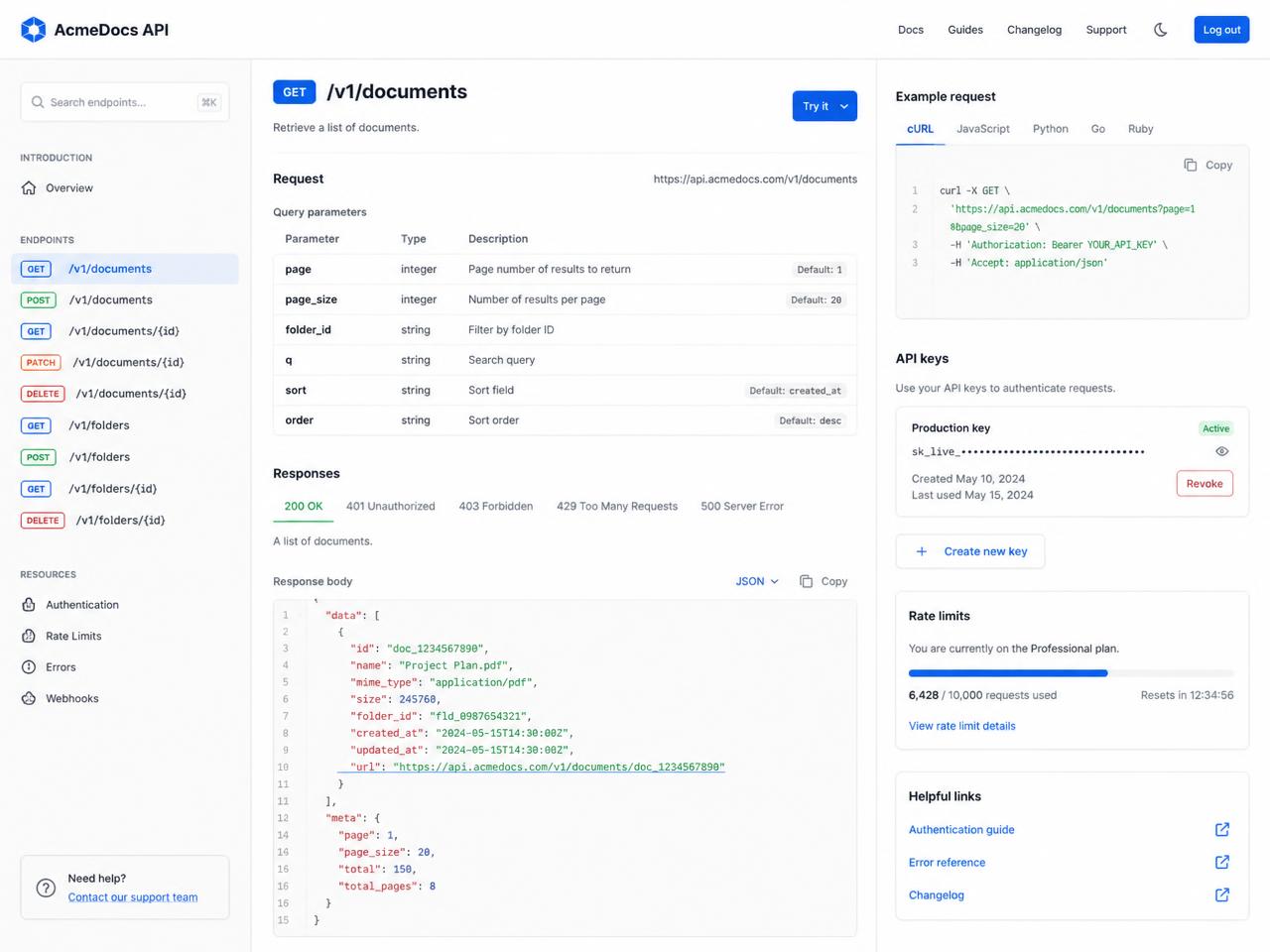
Versioned, documented APIs and webhooks that other teams can build against.
The contract comes first.
We design the API contract before implementation, review it with the people who will consume it, and generate documentation and clients from the same schema.
Why it matters
An API is a contract. Once partners depend on it, unclear versioning and inconsistent errors become expensive for everyone.
What we build
REST and GraphQL APIs, public developer platforms, webhooks, integration layers over legacy systems, and documented SDKs.
Who it is for
Platforms exposing data to partners, mobile and web clients needing one shared backend, and companies connecting fragmented internal systems.
What we handle from strategy to delivery.
Six areas we take responsibility for on api development engagements — no handoff gaps between them.
- 01
API design & contracts
Resources, schemas and OpenAPI specifications agreed first.
- 02
Implementation
Typed handlers, validation, pagination and consistent errors.
- 03
Auth & rate limiting
Keys, OAuth, scopes, quotas and abuse protection.
- 04
Webhooks & events
Signed deliveries, retries and replay for consumers.
- 05
Documentation & SDKs
Reference docs, examples and typed client libraries.
- 06
Versioning & monitoring
Deprecation policy, usage analytics and uptime alerting.
Standards we hold every api development project to.
- Documented
- OpenAPI and live examples
- Versioned
- Clear deprecation policy
- Rate limited
- Quotas and abuse protection
- Observable
- Usage and error analytics
From first conversation to a product that is ready to grow.
01 — Discover
We clarify the business model, pricing and the customers the platform has to serve on day one.
We review requirements, existing analytics, competitors and user needs to understand where api development will create the most value. Nothing is proposed before the problem is clear.
Deliverables
- Product scope
- Pricing and plan model
- Success metrics
Typical activities
- Founder workshop
- Market and competitor review
- Requirement capture
Success criteria
A clear, shared understanding of the problem, scope and expected outcome.
02 — Define
We settle tenancy, data model and environments — the decisions that are expensive to change later.
We turn research into a clear product direction, priorities and information architecture. Scope, sequencing and technical direction are agreed in writing before work starts.
Deliverables
- Architecture document
- Data model
- Release plan
Typical activities
- Technical design
- Security review
- Estimation
Success criteria
Everyone understands what is being built, in what order, and why.
03 — Design
We design onboarding, core workflows and admin tooling as one connected experience.
We translate the agreed structure into a polished, responsive interface — every state, breakpoint and edge case included, reviewed together as we go.
Deliverables
- Key screens
- Onboarding flow
- Component set
Typical activities
- Flow design
- Interface design
- Prototype review
Success criteria
The experience is validated and ready for implementation.
04 — Build
We implement the platform in vertical slices so working software is reviewable every week.
We turn approved designs into production-ready software using maintainable components and a scalable architecture. You see working software throughout, not just at the end.
Deliverables
- Production implementation
- Billing integration
- Admin tooling
Typical activities
- Iterative development
- Integration work
- Code review
Success criteria
The product works reliably across the required devices and scenarios.
05 — Validate
We test billing, permissions and limits — the paths where failures directly cost revenue.
We test the product against the real requirements, profile performance and surface issues before launch rather than after it.
Deliverables
- Test coverage report
- Billing test matrix
- Security checks
Typical activities
- Automated testing
- Permission testing
- Load testing
Success criteria
Critical issues are resolved and the product is ready for launch.
06 — Launch
We deploy with monitoring, usage analytics and a prioritised post-launch backlog.
We deploy, review the built product in production and refine the details that only appear in the real thing. Monitoring and handover happen at the same time.
Deliverables
- Production environment
- Analytics and alerting
- Handover documentation
Typical activities
- Go-live support
- Monitoring setup
- Iteration planning
Success criteria
The product is live, verified, documented and ready for users.
Everything handed over, nothing locked away.
Concrete output at the end of a api development engagement — code, assets and documentation you own.
The stack we reach for first.
Chosen per project constraints — this is the starting point, not a rule.
Frontend
- TypeScript
Backend
- Node.js
- OpenAPI
- GraphQL
Data
- PostgreSQL
- Redis
SaaS platforms built to scale.
Selected projects built with the same approach, team and standards.

AI Background Remover SaaS
SmartBG Remover
A subscription SaaS that removes image backgrounds in seconds, with batch processing and an API for developers.
- Next.js
- Python
- AWS
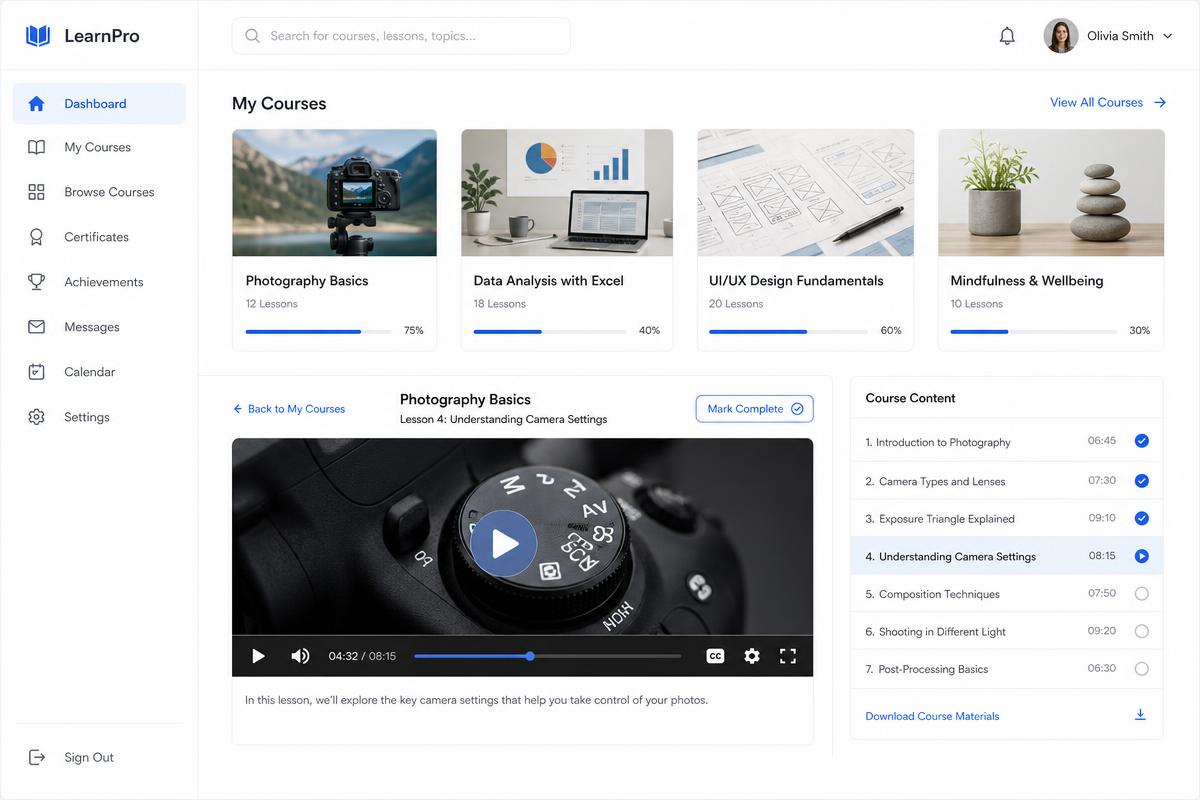
Online Learning Solution
E-Learning Platform
A course platform with video lessons, progress tracking, assessments and instructor analytics.
View project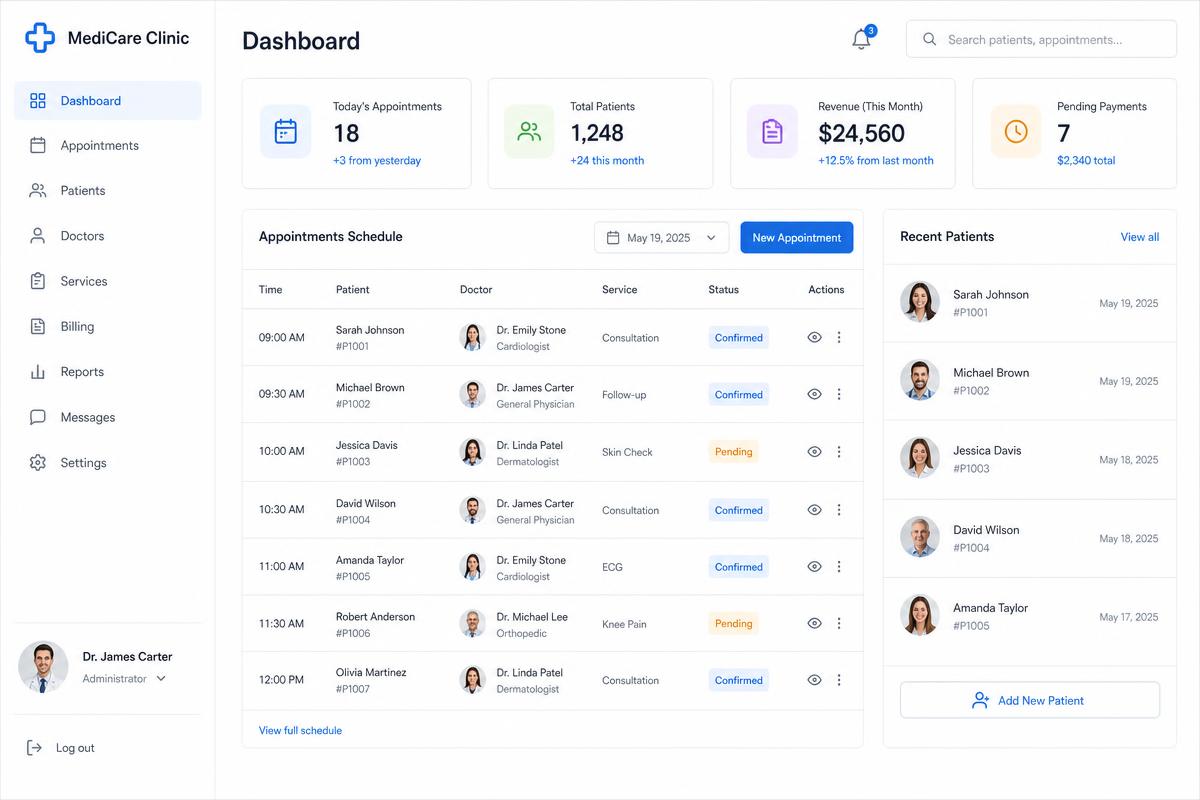
Doctor's Management System
Pocket MD
A clinic management system covering appointments, patient records, prescriptions and billing in one workspace.
View projectOutcomes, not just output.
Clients stay because the work reduces risk and cost after launch, not only because it looks good at handover.
- 01
Less rework
Contract-first design catches disagreements before implementation.
- 02
Faster decisions
Consumers build against a mock from week one.
- 03
Better performance
Pagination, caching and query budgets by default.
- 04
Clear handoff
Specs, docs and SDKs, not tribal knowledge.
- 05
Long-term thinking
Versioning that lets you evolve without breaking partners.
Questions we get asked.
Still unsure about something on api development? Ask us directly — we answer honestly, even when the answer is no.
REST for partner-facing integrations, GraphQL when a single client needs flexible aggregated reads. We often ship both over one service layer.
Versioned endpoints, deprecation headers and a published timeline before removal.
We generate typed clients from the schema for the languages your partners use.
Yes. An anti-corruption layer gives consumers a clean API while the legacy system stays untouched.
Yes — generated from the spec, with examples and, where useful, typed SDKs.
Often delivered together.
Web Applications
Complex, data-heavy web apps with reliable state, auth and role-based access.
View serviceSaaS Products
End-to-end SaaS builds from first version to a product with paying customers.
View servicePayment Integration
Checkout, subscriptions, payouts and reconciliation wired up securely end to end.
View service
Ready to build something better?
Tell us what you are trying to build. We'll help you figure out the right next step — scope, sequence and what it realistically takes.
Have a project in mind?
Let’s build something amazing together.
Stay in the loop.
Get useful insights on technology, digital products, AI and web development delivered to your inbox.